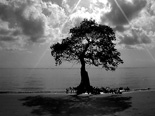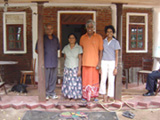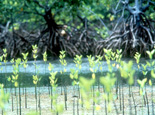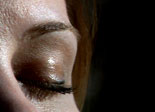
I am developing a series of works that include essays, tsunami survivor kits, installations and performances. Specifically, 40.000 Trees - A Postcard from the Tsunami - is a multimedia performance that employs video, audio, dance and theater in an attempt to share this important piece of personal history, part trauma and part love story. The main purpose of this production was to bring people to a different level of consciousness about a specific disaster and its long term lasting effects, and hopefully inspire some of them to action. This performance took place on May 4th 2008 at MonkeyTown in Brooklyn, NY.
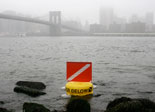 I have recently exhibited an interactive installation at the 12th Annual Art Under the Bridge Festival in Dumbo. D'Art Buoy is a site-specific multimedia installation that creates generative and meditative sounds thanks to a buoy anchored in the East River, which broadcasts its presence and voice live through music and evening light shows at the Brooklyn Bridge Park in Dumbo. This piece was a collaboration with Gadi Sassoon and Alex Giorgetti. For more information, please visit the D'Art Buoy website.
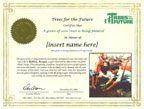 I am currently in the process of contacting financing groups, fundraising and researching nurseries in Sri Lanka as well as other not-for-profit organizations that work in the field of reforestation and tree planting to start a collaboration and work out the practical details of this project by the end of Fall 2008. I recently received an Agroforestry certificate, after completing the training offered by Trees For the Future. I have submitted this project to a call-for-proposals and I created a 30-second video with my application, you can check it out high resolution on YouTube.